

Look closer at the forces shaping our universe—and the ideas challenging how we understand them. Explore gravity, quantum physics, spacetime, and the nature of matter through accessible explanations and researcher interviews. Discover the questions, experiments, and possibilities behind the equations.

Eric Reiter’s Threshold Model Challenges Quantum Mechanics
Can one radiation emission trigger two full-sized detector responses? Eric Reiter says his gamma-ray and alpha-particle experiments reveal this effect, challenging quantum mechanics with a Threshold Model that…
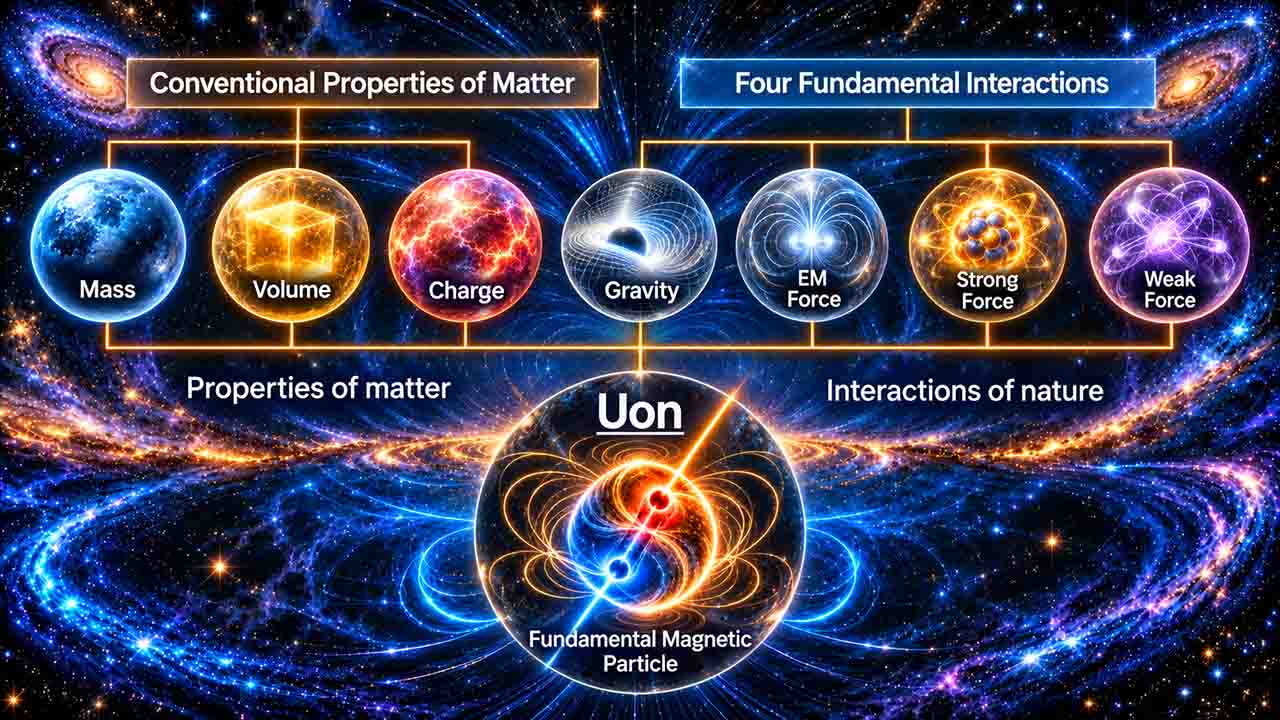
One Particle, One Force, One Universe: Dr. Weiping Yu’s Uon Theory
What if antigravity propulsion doesn't require exotic fuels or spacetime manipulation, but a new understanding of magnetism? At the October 24, 2026 Alt Propulsion Engineering Conference (APEC), physicist and aerospace…

Russian Torsion Physics: Did Soviet Scientists Discover a New Force of Nature?
In the Soviet Union's final decades, researchers claimed that a mysterious property of spacetime could unlock faster-than-light communications, propellantless spacecraft, and energy drawn from the vacuum. Some invoked…

The Physics Of Tom Bearden: Tesla, Scalar Waves & Zero-Point Energy
Tom Bearden imagined a world where generators never needed fuel, spacecraft drew power from empty space, and electromagnetic systems could reshape matter itself. Physicist Dr. David Chester doesn’t accept those promises…
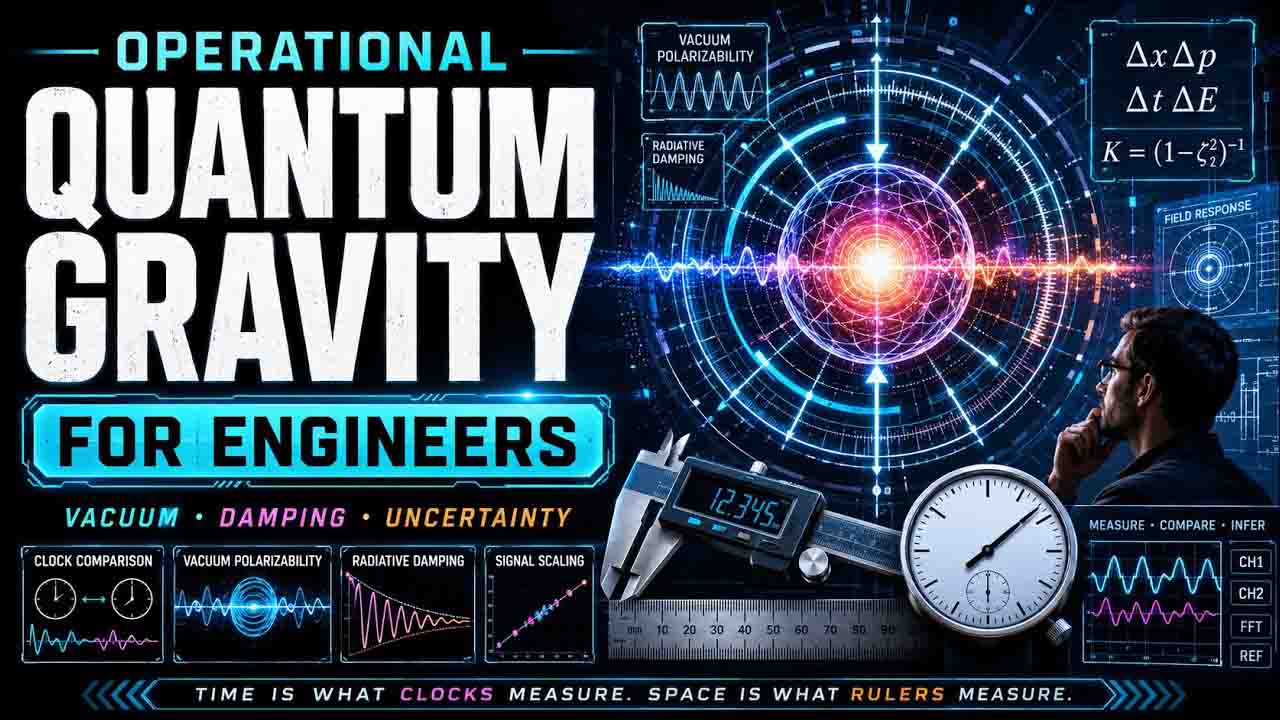
Todd Desiato’s Operational Quantum Gravity For Engineers
Todd Desiato isn't asking you to abandon Einstein - just to imagine that the familiar bending of clocks and rulers may be the visible face of a deeper material process: matter settling into a different equilibrium with…

Spin, Gravity, and Mythology: Why Antigravity Keeps Going in Circles
Across the long history of legends about antigravity and breakthrough propulsion, spin appears with uncanny persistence—not merely as an engineering choice, but as a symbol of hidden order, stored force, and rebellion…

The Pope-Osborne Angular Momentum Synthesis Theory (POAMS)
The Pope-Osborne Angular Momentum Synthesis Theory (POAMS) explains gravitational and electrostatic behavior through angular momentum rather than through invisible field forces. Developed by Anthony D. Osborne and N.…

The Dineutron Engine: Energy and Propulsion from the Quantum Vacuum
The dineutron engine would be powerful, but it would not have a mighty roar. It would not glow like a reactor core, spit exhaust like a rocket, or hum like a turbine. It would hide inside the nucleus of an atom, where…

The Vacuum Propeller: The Pendulum Test That Challenges Known Physics
The phrase sounds impossible before the experiment even begins: a propeller for the vacuum. A propeller is a bargain with matter; it pushes air, water, plasma, anything with enough substance to push back. The vacuum is…

Heim Theory: Geometry, Propulsion, and the Physics Beyond Rockets
Heim Theory has spent decades at the edge of science—not because it lacked ambition, but because it asked for almost too much at once. Burkhard Heim wanted to move beyond the rocket equation, derive particle masses from…